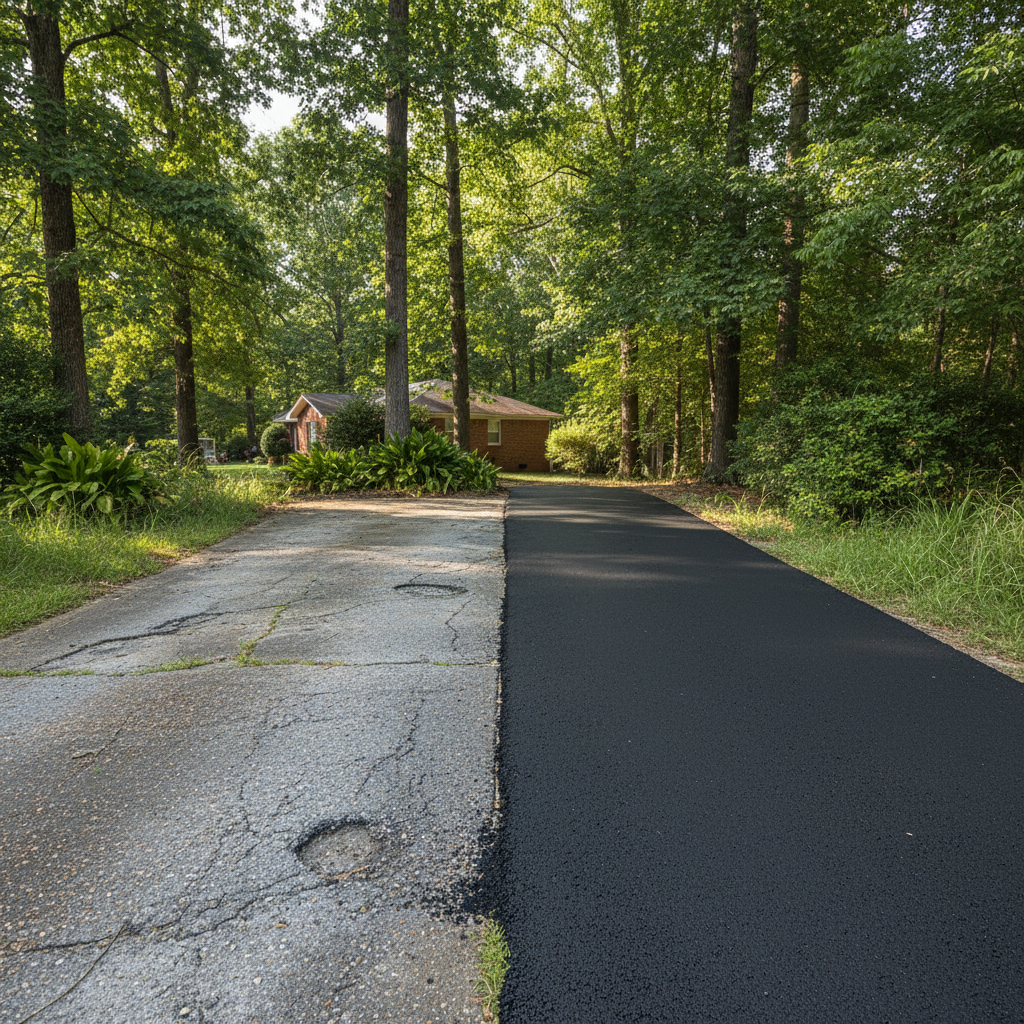
Alright, let's talk driveways. You're probably looking to put in a new one or finally replace that old, cracked mess, right? You've got two main choices staring you down: asphalt and concrete. Both get the job done, sure, but they're definitely not the same animal. As a local guy who's been laying down pavement for years, I've seen it all, believe me. So, I'm here to tell you what you *really* need to know when you're making this decision, especially here in Atlanta.
Initial Cost: Where Your Wallet Feels It First
Let's be blunt: concrete usually costs more upfront. A good bit more, actually — sometimes it's double the price of asphalt for the same square footage. Why's that? Well, concrete's materials are pricier, and it just takes more labor and specialized equipment to pour and finish it correctly. Asphalt, on the other hand, is a petroleum-based product. While oil prices jump around, it generally stays the more budget-friendly option for installation.
Now, I'm not saying cheap is always best, not at all. But if you're working with a tighter budget and still want a solid, reliable driveway, asphalt is often the way to go initially. You'll get a great looking, functional driveway without having to break the bank right out of the gate.
Durability & Lifespan: How Long Will It Last?
This is where things get interesting, and a lot of folks have some misconceptions. Generally speaking, a well-installed concrete driveway can last 30 years or even more. It's tough, can handle heavy loads, and resists a lot of wear and tear. But, and this is a big 'but' for us here in Georgia, concrete *can* crack. Tree roots, especially from those big oaks and pines we've got all over places like Buckhead or East Cobb, can really wreak havoc. Our clay soil, with its expansion and contraction due to moisture, also puts a ton of stress on rigid concrete slabs, often leading to heaving and cracking.
Asphalt, while typically having a shorter lifespan (15-25 years with proper maintenance), is much more flexible. It's designed to flex with our shifting soil and handle temperature changes without cracking as easily. Think of it like a tough, pliable mat instead of a rigid slab. It's less prone to the kind of catastrophic cracking you see in old concrete driveways around here. Majestic Asphalt Company builds driveways to withstand our local conditions, and that flexibility is a key advantage, wouldn't you agree?
Maintenance: What's the Upkeep Like?
This is another area where asphalt often gets a bad rap, but it's usually because people aren't doing the right maintenance. Both need some love, but it's different kinds of love.
- Concrete: Seems low-maintenance, right? Just sweep it. But to keep it looking good and prevent staining, you really should seal it every few years. And if it cracks, repairs can be tricky and often look patched. Plus, oil stains are a real pain to get out of concrete.
- Asphalt: This is where sealcoating comes in. You should plan to sealcoat your asphalt driveway every 2-3 years. It's not just for looks; it protects the asphalt from UV rays, water, and chemicals, extending its life significantly. It's a relatively inexpensive process, and it keeps your driveway looking fresh and new. Small cracks are also much easier and more seamlessly repaired in asphalt.
So, while asphalt requires more frequent maintenance (sealcoating), it's generally easier and cheaper to do than major concrete crack repair. Good to know, right?
Appearance: What Look Are You Going For?
This is purely subjective, of course, but let's talk about the aesthetics.
- Concrete: Offers a lighter, brighter look. You can stamp it, color it, or expose aggregates for different textures and styles. It can definitely give a more formal or custom feel to your home.
- Asphalt: Provides a classic, dark, smooth finish. It's sleek, absorbs heat (which can be a pro in winter, con in summer!), and offers a nice contrast to green landscaping. A freshly sealcoated asphalt driveway looks incredibly sharp and clean.
Both can look fantastic. It really boils down to your personal preference and the overall aesthetic of your home.
My Recommendation for Atlanta Homeowners
Given our specific conditions here in Atlanta – the heavy clay soils, the hot summers, the occasional freezing temps in winter, and the prevalence of mature trees – I generally lean towards asphalt for residential driveways. It handles our soil movement better, it's more forgiving with minor issues, and the regular maintenance (sealcoating) is a proactive way to keep it looking great and lasting a long time, rather than reacting to expensive concrete repairs.
Now, if you've got a specific design vision that only concrete can achieve, or you're willing to invest more upfront and potentially deal with more complex repairs down the line, concrete is a perfectly viable option. But for the average Atlanta homeowner looking for a durable, cost-effective, and practical solution that stands up to our local environment, asphalt is usually the smarter choice. We've seen countless driveways, both asphalt and concrete, across neighborhoods from Sandy Springs to Decatur, and asphalt consistently proves its worth in our climate.
If you're still on the fence or want to talk specifics about your property, give us a call at Majestic Asphalt Company. We're happy to walk you through your options and give you an honest assessment.